
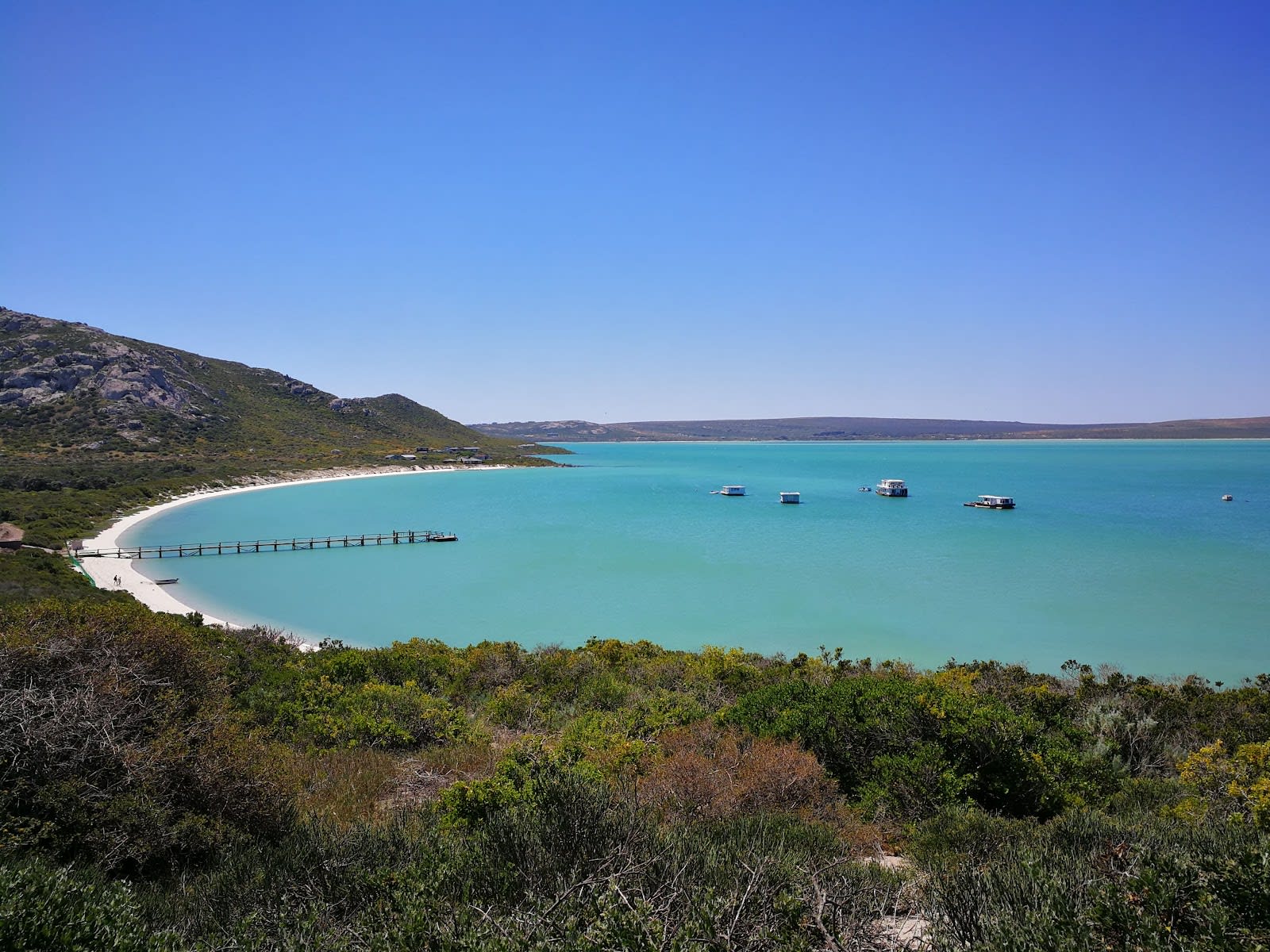
West Coast National Park
Western Cape · Best Sep to Apr
1 place

The common redshank or simply redshank (Tringa totanus) is a Eurasian wader in the large family Scolopacidae.
Western Cape and beyond
Provinces where Common Redshank is most recorded. Tap one to find places to stay.
8 records, iNaturalist
Across the Western Cape
West Coast National Park
Common Redshank recorded here

Voëlklip, Hermanus


Swellendam


Wittedrift, Plettenberg Bay


Riebeek Valley, Riebeek West

Birder friendly

Gardens, Cape Town

Klapmuts, Simondium

Bakoven, Cape Town

Stanford


Franschhoek

Stellenbosch


The Crags, Plettenberg Bay

Stanford
Birder friendly

Franschhoek

Prince Albert


Somerset West


Oudtshoorn

Franschhoek

Simon's Town, Cape Town


Constantia, Cape Town

Calitzdorp

Constantia, Cape Town

Stanford

Stanford

Next stop
Southern right whales, sea cliffs, and Hermanus's harbour town
See places that give backPlanning a trip
Hosts have recorded the Common Redshank at stays in or beside West Coast National Park.
Drive yourself
Your own vehicle and pace, on the park's roads.
Where hosts record it
IUCN Red List
Least Concern
Species
Tringa totanus
Records
8
iNaturalist observations
Every booking on Spekboom supports conservation.
A record means a host has seen the Common Redshank on the property or nearby. It is never a guarantee of a sighting.
Hosts on Spekboom have recorded the Common Redshank at stays in or beside West Coast National Park. A record means a host has seen it on the property or nearby, which makes these the places to base yourself; it is never a guarantee of a sighting on any given day.
The Common Redshank is most recorded in Western Cape (50% of records), Eastern Cape (50% of records), based on 8 iNaturalist observations. 1 place to stay on Spekboom in Western Cape has recorded the Common Redshank on site or nearby.
The Common Redshank (Tringa totanus) is listed as Least Concern on the IUCN Red List.
The common redshank or simply redshank (Tringa totanus) is a Eurasian wader in the large family Scolopacidae. The genus name Tringa is the New Latin name given to the green sandpiper by Aldrovandus in 1599 based on Ancient Greek trungas, a thrush-sized, white-rumped, tail-bobbing wading bird mentioned by Aristotle. The specific totanus is from Tótano, the Italian name for this bird.