
AA Badenhorst Family Wines
Swartland, Hermon
From R 2,900a night

Across Africa
Swartland, Hermon

Prince Albert


Paarl


Prince Albert


Tokai, Cape Town
Across Africa. Rates on request.

Klapmuts, Simondium
Constantia, Cape Town

Paarl

Karoo National Park
Franschhoek

Ladismith


Stellenbosch

Constantia, Cape Town

Next stop
Stellenbosch and Franschhoek vineyards, an hour up the N1
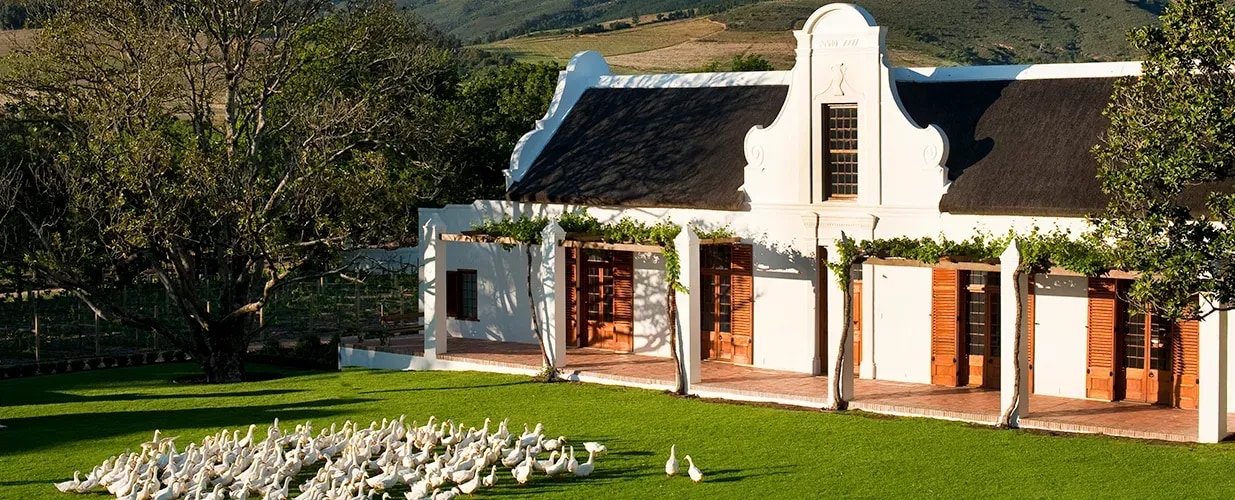
See places that give backCape Dutch is the Western Cape's own style: whitewashed walls, thatched roofs and the curved gables that settlers built from the late 1600s onwards. The farmhouses were laid out simply, often as an H, a T or a U, with a gable over the front door that frequently carries the year it was built.
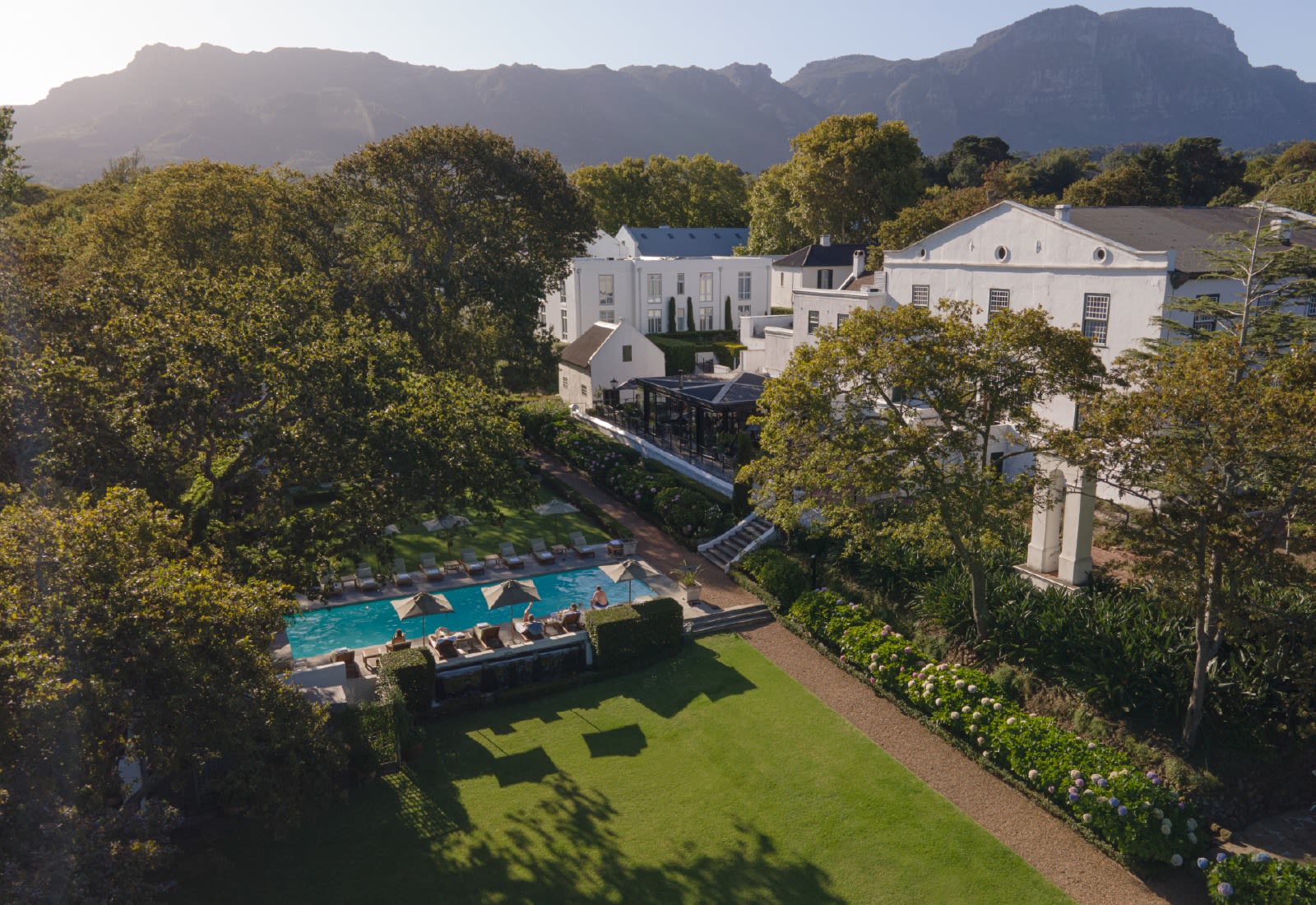
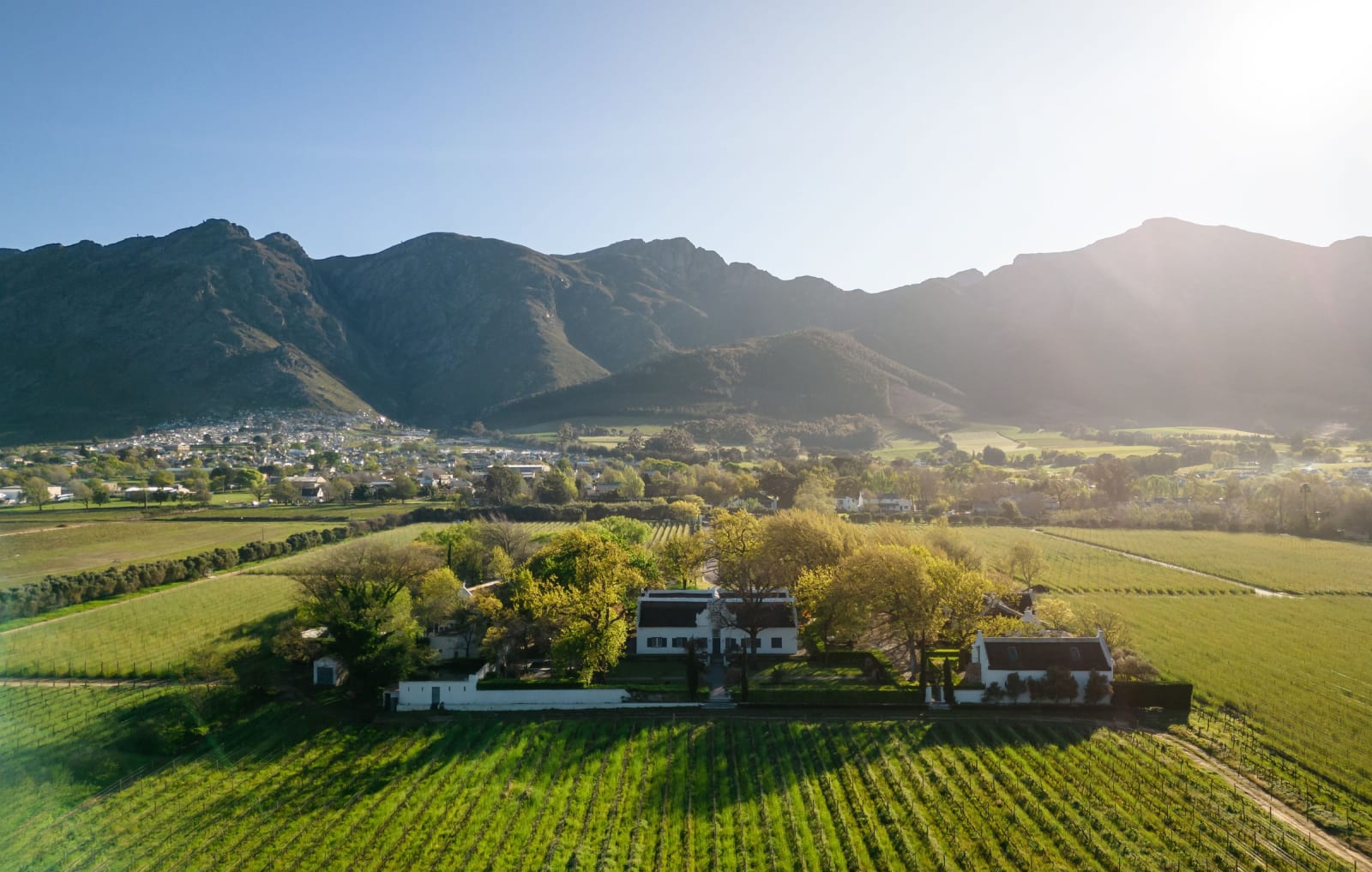
Most of the surviving houses stand on wine and fruit farms in the Winelands, around Franschhoek, Stellenbosch, Paarl and Tulbagh, with more in the Overberg and scattered through the Karoo towns. Many are still working farms, so a stay often comes with a cellar, an orchard or a kitchen garden.
Every stay on this page can be booked here. Most are request to book: you send your dates, the host confirms, and you pay in rand. Guests pay no service fee, and a share of each booking goes to the cause named on the listing.
The ornamental front of the roof above the main door. Early gables were plain; later ones grew curved and scrolled, and many carry the date the house was built or extended.
In the Cape Winelands, especially around Franschhoek, Stellenbosch, Paarl and Tulbagh. There are more in the Overberg and in older Karoo towns such as Graaff-Reinet.
Hosts can name their own style in the listing editor, and when they do, that is what places them here. Otherwise we read the listing's own description.