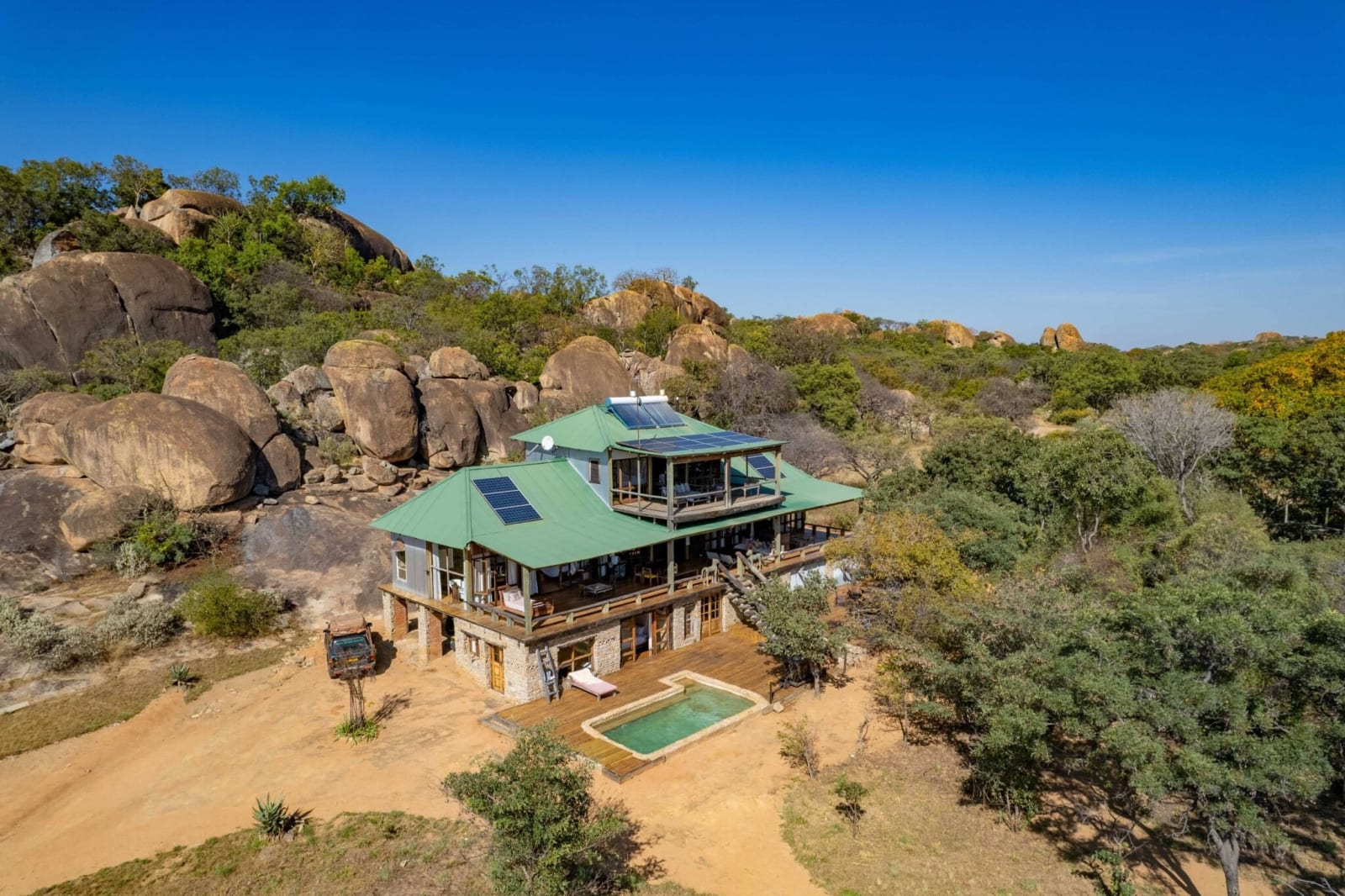
Khayelitshe House
Matobo National Park
Savanna biome · Silver cluster leaf · Mopane
Price on request
7.6 km away
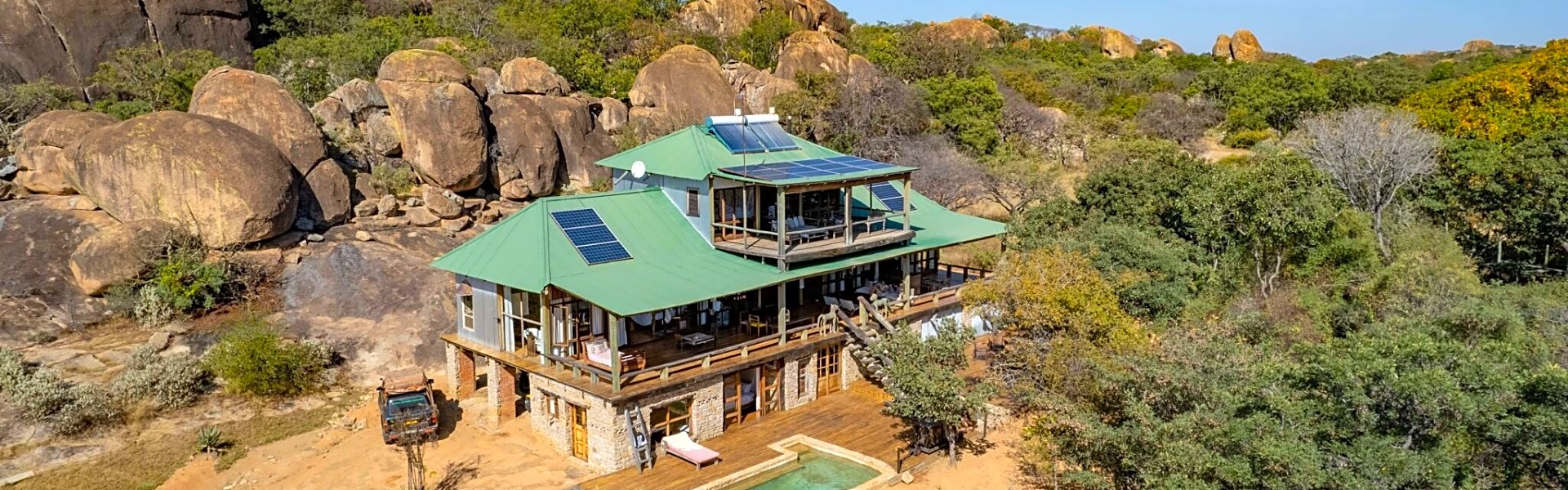
Ancient rock art and black eagles
Zimbabwe
The Matobo hills are a granite landscape of balancing boulders and whaleback domes south of Bulawayo, a World Heritage Site for the thousands of San rock paintings in their caves and shelters, some among the finest in Africa. The park holds one of the densest populations of leopard and of Verreaux's eagles in the world, and a fenced section protects black and white rhino that can be tracked on foot with a guide. Cecil Rhodes is buried on the summit of Malindidzimu, the "view of the world". There are no lions or elephants. The lodges and ZimParks chalets sit among the hills, and it is a malaria-low area at altitude.
Things to do: Cultural activities · Guided walk · Hiking · Scenic drives
Where you can stay: Lodges · Camping
Inside-park stays and nearby lodges, sorted by distance.
Matobo National Park
Savanna biome · Silver cluster leaf · Mopane
Price on request
7.6 km away
Most of the rain at Matobo National Park falls from November to March, peaking in January at about 161 mm. The dry season runs from May to October, with little or no rain. October is the hottest month, with average highs of about 29°C, and June the coolest, with average lows of about 6°C.
| Month | Rain (mm) | Average high (°C) | Average low (°C) |
|---|---|---|---|
| January | 161 | 26 | 17 |
| February | 115 | 27 | 16 |
| March | 63 | 26 | 15 |
| April | 31 | 25 | 12 |
| May | 5 | 24 | 9 |
| June | 4 | 22 | 6 |
| July | 2 | 21 | 6 |
| August | 1 | 25 | 8 |
| September | 5 | 28 | 12 |
| October | 19 | 29 | 15 |
| November | 85 | 29 | 16 |
| December | 160 | 27 | 17 |
Averages for 2005 to 2024 at the park's centre point, about 1399 m above sea level. Weather data from Open-Meteo.com (opens in a new tab) (ERA5), CC BY 4.0.
One stay we sell in Matobo National Park. Tap the pin for the listing.
20.4892° S, 28.5326° E2,000 km from Cape TownOpen in Maps (opens in a new tab)
Why book here
Wild places survive when the communities around them earn more from protecting wildlife than from anything that would replace it. Every stay you book through Spekboom carries a conservation contribution built into the price, never added on top, so choosing where you sleep becomes a way to fund the people and projects keeping this landscape intact.
Matobo National Park is in Zimbabwe.
Zimbabwe Parks and Wildlife Management Authority runs lodges, chalets and campsites inside its parks and charges an entry fee per person per day with different rates for Zimbabweans, SADC residents and international visitors. Request the stays listed on this page on Spekboom.
Most of the rain at Matobo National Park falls from November to March, peaking in January at about 161 mm. The dry season runs from May to October, with little or no rain. October is the hottest month, with average highs of about 29°C, and June the coolest, with average lows of about 6°C. Averages for 2005 to 2024 at the park's centre point, about 1399 m above sea level.
The best time to visit Matobo National Park is Year-round.
Popular activities at Matobo National Park include cultural activities, guided walk, hiking, scenic drives.
Spekboom lists stays in and near Matobo National Park, from inside-park camps to nearby lodges. Every booking funds conservation.
The closest parks and reserves. Distances run centre to centre, as the crow flies.

Limpopo, South Africa
National Park · 212 km
Ancient kingdom archaeological site
World Heritage

Zimbabwe
National Park · 237 km
Massive elephant populations
World Heritage Site · 41 km · Matabeleland North, Zimbabwe
Dry-stone walled capital of the Torwa state, west of Bulawayo
World Heritage · Malaria-free
Other parks and reserves that share something with Matobo National Park.
UNESCO World Heritage Sites in AfricaNational parks in Southern and East AfricaNational parks and reserves in ZimbabweAll protected areas
