
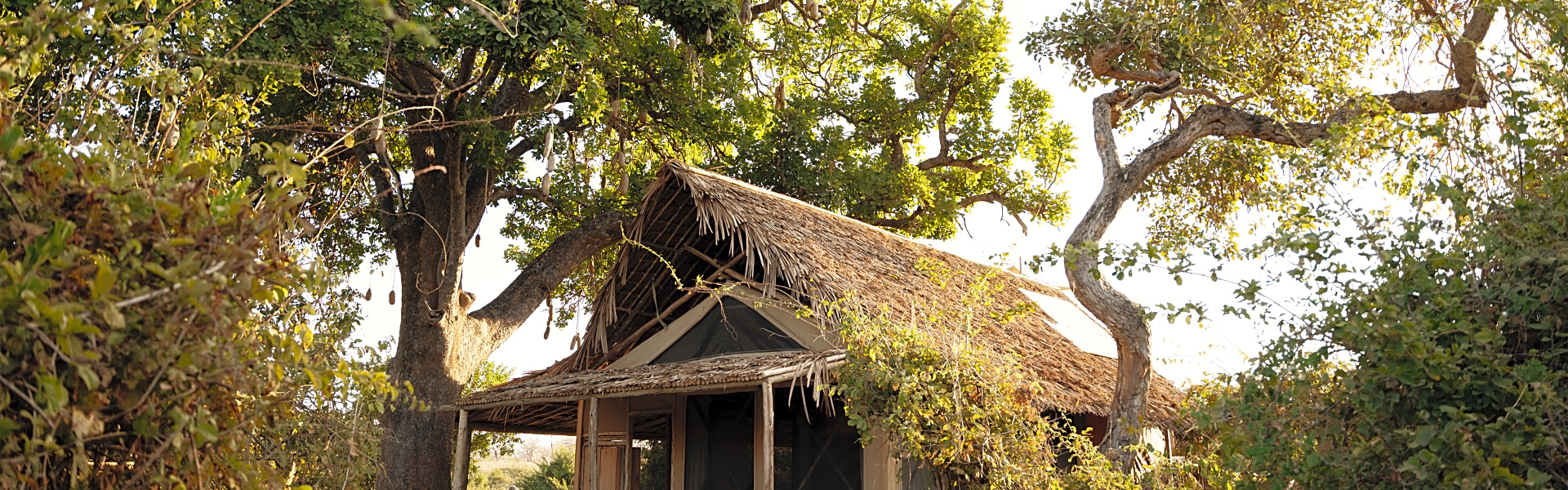
Kigelia Ruaha
Iringa
Savanna biome · African elephant · Baobab
Price on request
Inside park
High diversity of antelope species
Tanzania
Ruaha is Tanzania's largest true national park and its wildest, a landscape of baobabs, granite kopjes and the Great Ruaha River in the centre of the country, where the southern and eastern African wildlife regions overlap, so that greater and lesser kudu, sable and roan share the ground with elephant and one of the largest lion populations in Africa. It has a handful of camps, very few visitors, and walking safaris. The dry season from June to October concentrates everything along the river; the rains close much of the park. It is reached by charter flight from Dar or by road from Iringa, and it is a malaria area.
Things to do: Game drives · Guided walk
Where you can stay: Safari camps
Inside-park stays and nearby lodges, sorted by distance.
Iringa
Savanna biome · African elephant · Baobab
Price on request
Inside park
Most of the rain at Ruaha National Park falls from November to April, peaking in March at about 234 mm. The dry season runs from May to October, with little or no rain. October is the hottest month, with average highs of about 31°C, and June the coolest, with average lows of about 14°C.
| Month | Rain (mm) | Average high (°C) | Average low (°C) |
|---|---|---|---|
| January | 228 | 27 | 19 |
| February | 183 | 28 | 18 |
| March | 234 | 28 | 18 |
| April | 144 | 27 | 18 |
| May | 14 | 27 | 16 |
| June | 1 | 27 | 14 |
| July | 0 | 27 | 14 |
| August | 0 | 28 | 14 |
| September | 0 | 30 | 16 |
| October | 10 | 31 | 18 |
| November | 66 | 31 | 19 |
| December | 197 | 29 | 19 |
Averages for 2005 to 2024 at the park's centre point, about 1191 m above sea level. Weather data from Open-Meteo.com (opens in a new tab) (ERA5), CC BY 4.0.
One stay we sell in Ruaha National Park. Tap the pin for the listing.
7.8017° S, 34.3730° E2,000 km from Cape TownOpen in Maps (opens in a new tab)
Why book here
Wild places survive when the communities around them earn more from protecting wildlife than from anything that would replace it. Every stay you book through Spekboom carries a conservation contribution built into the price, never added on top, so choosing where you sleep becomes a way to fund the people and projects keeping this landscape intact.
Ruaha National Park is in Tanzania.
Tanzania National Parks charges a conservation fee per person per 24 hours, with different rates for East African citizens, expatriate residents and non-residents, plus vehicle fees and VAT. Fees are paid electronically through the TANAPA payment system, not in cash at the gate. Safari operators normally handle this within the trip price.
Most of the rain at Ruaha National Park falls from November to April, peaking in March at about 234 mm. The dry season runs from May to October, with little or no rain. October is the hottest month, with average highs of about 31°C, and June the coolest, with average lows of about 14°C. Averages for 2005 to 2024 at the park's centre point, about 1191 m above sea level.
The best time to visit Ruaha National Park is Dry season.
Popular activities at Ruaha National Park include game drives, guided walk.
Places to stay inside Ruaha National Park include Kigelia Ruaha. Request them on Spekboom and pay once your dates are confirmed. Every booking funds conservation.
The closest parks and reserves. Distances run centre to centre, as the crow flies.
Other parks and reserves that share something with Ruaha National Park.
National parks in Southern and East AfricaNational parks and reserves in TanzaniaAll protected areas
