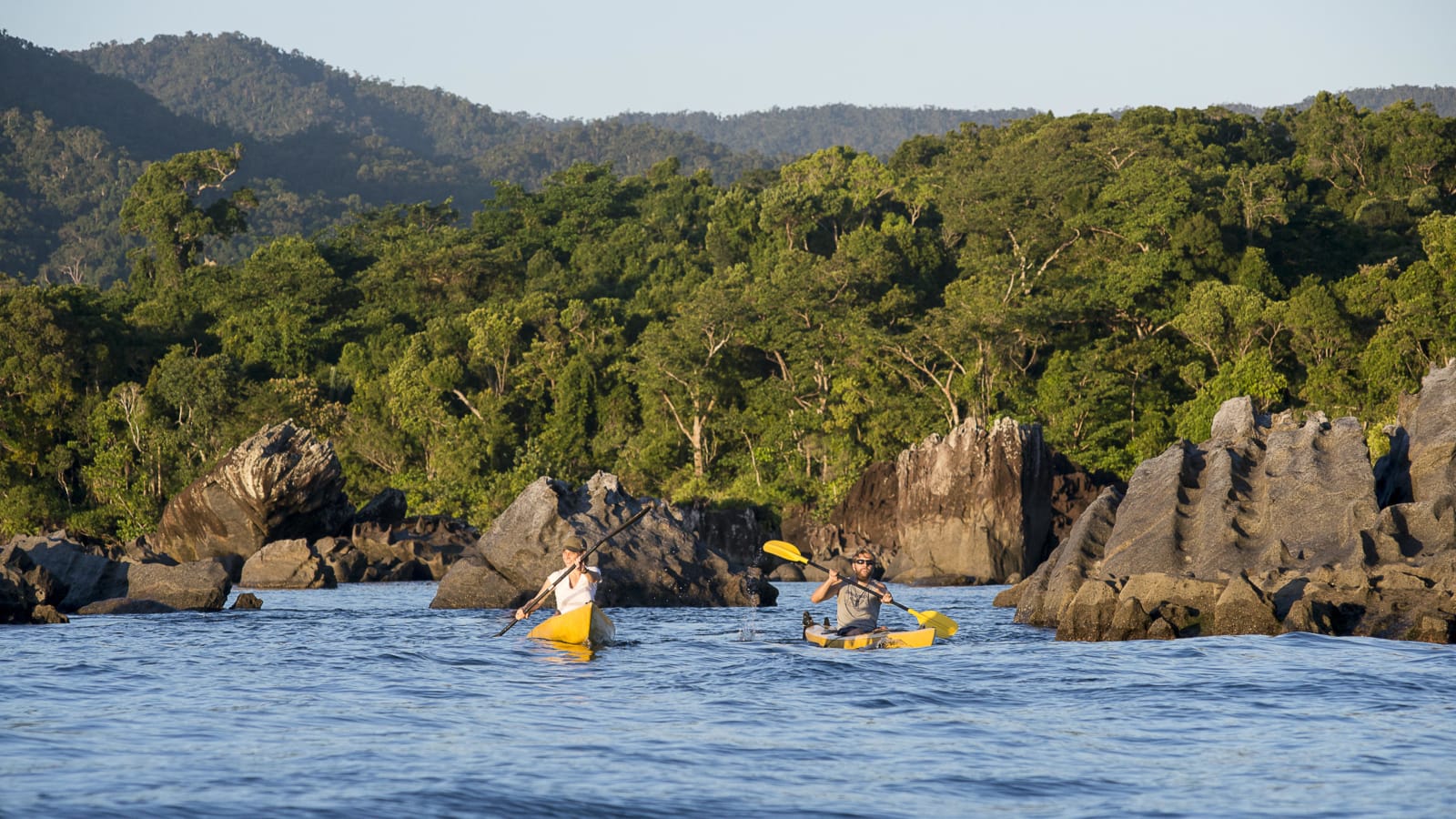
Masoala National Park
Sava · Best Drier months
1 lieu

The Ward's flycatcher (Pseudobias wardi), also known as Ward's flycatcher-vanga is a species of bird in the family Vangidae.
Voici les parcs où les hôtes de Spekboom l’observent.
Most records Oct to Nov
When Ward's Flycatcher sightings peak, from open records. Outside these months it is seen less often, not never.
Curve from 86 national iNaturalist observations, not from one property. Single-month spikes are discarded as upload artefacts, and below 50 records we show no curve at all.
À travers Afrique du Sud

Benguela Cove, Hermanus

Accueillant pour les ornithologues

Bergville


Kruger National Park

Accueillant pour les ornithologues

Riebeek Valley, Riebeek West
Accueillant pour les ornithologues

Hazyview


Klapmuts, Simondium

Gardens, Cape Town

Bakoven, Cape Town

Timbavati Private Nature Reserve

Kruger National Park
Accueillant pour les ornithologues

Kruger National Park
Accueillant pour les ornithologues

Hluhluwe-Imfolozi Park


Kruger National Park
Accueillant pour les ornithologues

Madikwe

iSimangaliso Wetland Park

Swellendam


Hoedspruit


Franschhoek

Wittedrift, Plettenberg Bay


Stanford

Stanford
Accueillant pour les ornithologues

Stellenbosch


The Crags, Plettenberg Bay

Kruger National Park

Prochaine étape
Sandstone amphitheatres and cool mountain air
Voir les hébergements engagésPréparer un voyage
Liste rouge de l’UICN
Near Threatened
Espèce
Pseudobias wardi
Chaque réservation sur Spekboom soutient la conservation.
Une observation signifie qu’un hôte a vu l’espèce Ward's Flycatcher sur place ou à proximité. Ce n’est jamais une garantie de la voir.
Sightings of the Ward's Flycatcher peak from Oct to Nov, based on 86 iNaturalist records. You may still see it outside those months, sightings are just less frequent.
The Ward's Flycatcher (Pseudobias wardi) is listed as Near Threatened on the IUCN Red List.
The Ward's flycatcher (Pseudobias wardi), also known as Ward's flycatcher-vanga is a species of bird in the family Vangidae. It is monotypic within the genus Pseudobias. It is endemic to Madagascar. Its natural habitat is subtropical or tropical moist lowland forests.