Ir para o conteúdo principal
Sleeping in the fynbos: the CapeNature guide

Insider Guide: CapeNature Reserves

Sleeping in the fynbos: the CapeNature guide

Cottages, eco cabins and campsites in the Western Cape reserves, from the Cederberg to the whale coast

Updated

The Western Cape hides a quiet secret: you can sleep inside its nature reserves. CapeNature, the provincial conservation agency, runs cottages, eco cabins and campsites in the mountains and along the coast it protects, and most travellers drive straight past them on the way to guesthouses in town. The reward for turning in at the reserve gate is waking up with the fynbos to yourself: a Cederberg cottage under sandstone cliffs, a cabin in the milkwood forest behind a Goukamma dune, birdsong at a west coast pan before the day visitors arrive.

Every night booked in a reserve is revenue for the agency that manages the fire crews, clears the invasive alien vegetation and guards the leopards of the Cape Fold Mountains. This guide gathers the CapeNature stays into one place, region by region, and answers the questions travellers ask about booking them.
The mountains: Cederberg, Anysberg and Gamkaberg

The Cederberg is the flagship: a sandstone wilderness of arches, caves and rock art three hours north of Cape Town, with cottages around the old forestry station at Algeria and farmhouse stays deeper in the valley. Anysberg, in the Klein Karoo beyond Montagu, is the remote one, a reserve the size of a small country with dark-sky nights and horse trails. Gamkaberg, near Oudtshoorn, protects Cape mountain zebra in a range of its own and sleeps its guests in tented eco camps and stone cottages tucked into the kloofs.

Mountain and Karoo reserve stays

Cottages, eco camps and campsites in the Cederberg, Anysberg and Gamkaberg.

A partir de R 1,340 por noite

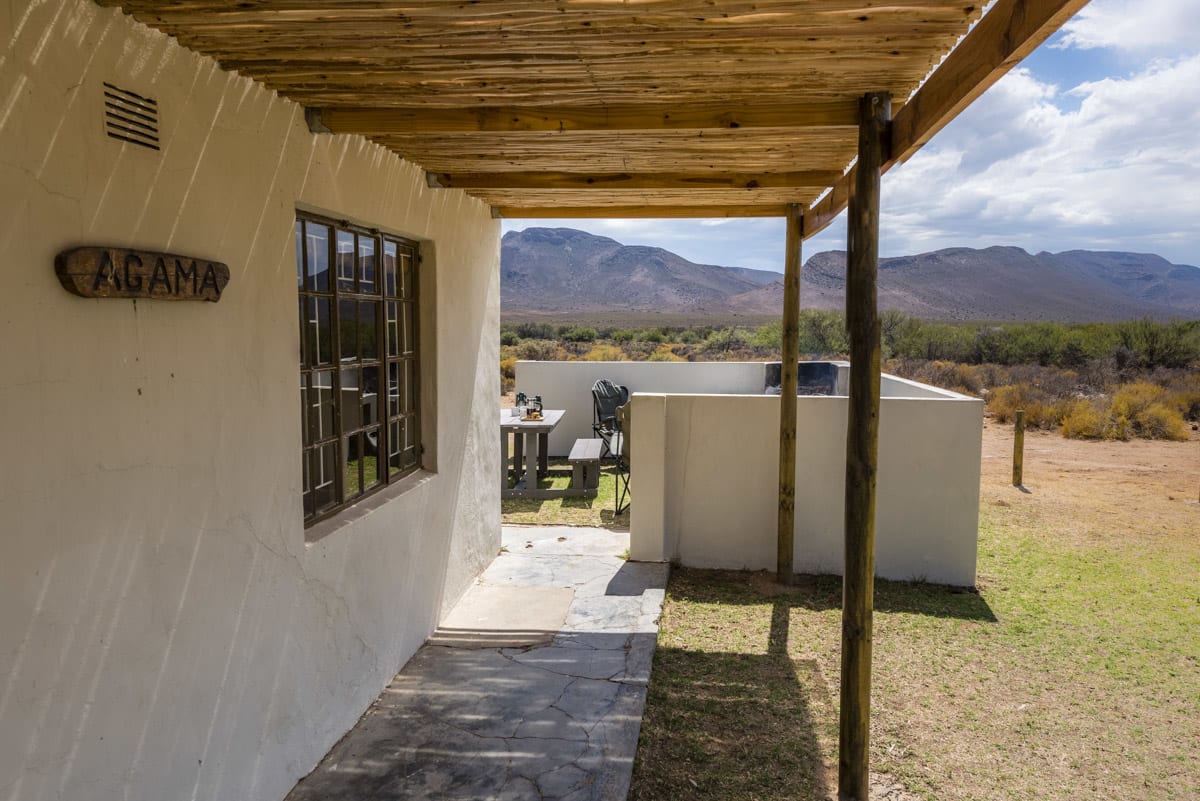
Agama Cottage

A partir de R 1,990 por noite

Algeria Cottages

A partir de R 1,520 por noite

Chameleon Cottage

The coast: De Hoop, Kogelberg, Goukamma and Rocherpan

The coastal reserves are as varied as the shoreline itself. De Hoop, east of Cape Agulhas, is the grand one: white dunes, a birdlife-rich vlei and, from about June to November, one of the best land-based whale-watching stretches in the world. Kogelberg, above Betty’s Bay, is the heart of the fynbos kingdom, with architect-designed eco cabins at Oudebosch. Goukamma, between Sedgefield and Knysna on the Garden Route, mixes forest lodges, river cabins and dune cottages around the Groenvlei lake. And Rocherpan, up the west coast, puts birders in cabins beside a seasonal pan that fills with flamingos.

Coastal reserve stays

Cabins and cottages at De Hoop, De Mond, Kogelberg, Goukamma and Rocherpan.

A partir de R 1,560 por noite

Blacktail Cottage

The quiet corners: Grootvadersbosch and Vrolijkheid

Two smaller reserves reward the unhurried. Grootvadersbosch, in the foothills of the Langeberg near Swellendam, shelters one of the largest indigenous forests in the province, with cabins and campsites under the canopy and some of the best forest birding in the Cape. Vrolijkheid, in the renosterveld hills near McGregor, is the sleeper: quiet cottages, walking trails and a stillness that explains the name less than the landscape does.

Forest and renosterveld stays

Cabins and cottages at Grootvadersbosch and Vrolijkheid.

A partir de R 1,950 por noite

Ichelesi Cottage

A partir de R 1,780 por noite

Scolopia Cottage

Conservation partners in the fynbos

Organisations working across the same mountains and valleys the reserves protect.

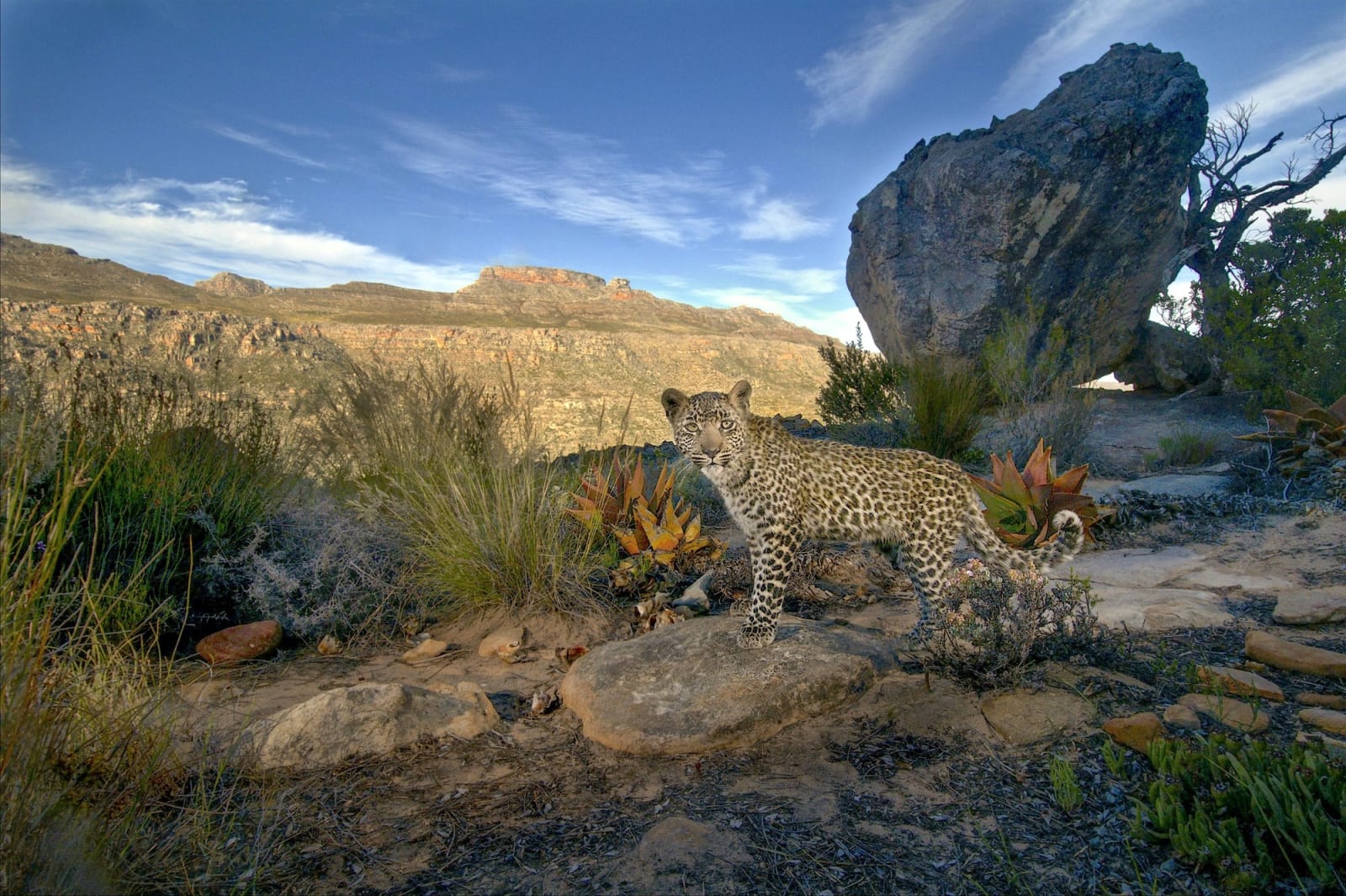
Cape Leopard Trust

Cape Leopard Trust

Protecting leopards and leopard landscapes through research, conservation and education in the Western Cape

Every reserve stay on one map

All the CapeNature stays in this guide, from the Cederberg to the Garden Route, mapped together.

Questions travellers ask

Can you stay overnight in a CapeNature reserve?

Yes. CapeNature runs self-catering cottages, eco cabins, tented camps and campsites inside many of its reserves, including the Cederberg, De Hoop, Kogelberg, Goukamma, Gamkaberg and Anysberg. Staying overnight means you are inside the reserve before day visitors arrive and after they leave, and the revenue funds the conservation work itself.

How do you book CapeNature accommodation?

Book them here on Spekboom. Choose a cottage, cabin or campsite and your dates and send a request. We confirm with CapeNature, then you pay on Spekboom, and you can add farm stays and guesthouses nearby to the same trip. Request well ahead for school holidays, long weekends and the spring flower season, when the popular cottages fill up fast.

Do you need a permit to visit CapeNature reserves?

Day visitors need a permit for most CapeNature reserves, and CapeNature encourages buying these in advance, though gate payment is possible at many reserves. If you are staying overnight, your accommodation booking covers your entry for the stay; separate permits may still apply for specific hiking trails, so check your booking confirmation.

How much does it cost to stay in a CapeNature reserve?

The range is wide: campsites and simple huts at the affordable end, family cottages in the middle, and premium eco cabins such as those at Kogelberg at the top. Tariffs are revised each year and differ by reserve and season, so check current rates when you book. As a rule, reserve stays undercut comparable private accommodation nearby while putting the money directly into conservation.

Which CapeNature reserve is best to visit?

It depends on the trip. Hikers and rock-art lovers choose the Cederberg. Whale watchers go to De Hoop between about June and November. Fynbos enthusiasts pick Kogelberg, the richest corner of the Cape Floral Kingdom. Birders head for Rocherpan, Grootvadersbosch or the De Hoop vlei. For solitude and dark skies, Anysberg in the Klein Karoo is hard to beat, and Goukamma suits Garden Route travellers who want forest and beach in one reserve.

When is the best time to visit the Western Cape reserves?

Spring, from August to October, brings the flower season and the fynbos at its best. Whales are on the De Hoop coast from about June to November. Summer suits the rivers, rock pools and beaches, though the mountains are hot for midday hiking. Winter is green, quiet and dramatic, with snow sometimes dusting the high Cederberg, and it is the best season for cottage-and-fireplace weather.

Plan a reserves road trip

Chain the Cederberg, the whale coast and the Garden Route into one loop of reserve stays. Sign in to plan the route and book the cottages.

Plan a trip

How your stay makes an impact

Book any stay in this guide through Spekboom and a share of the booking supports the causes above. You can also donate to them directly.

1

Book your stay

Choose from the places to stay in this guide

2

Choose a cause

A portion of booking fees goes to the linked causes

3

Make an impact

Your stay supports conservation and community work on the ground