
The Kruger
Kruger National Park
Umbrella thorns and knob thorns across the southern and central plains.
Self-driveGuided
Stays near KrugerWhere to see
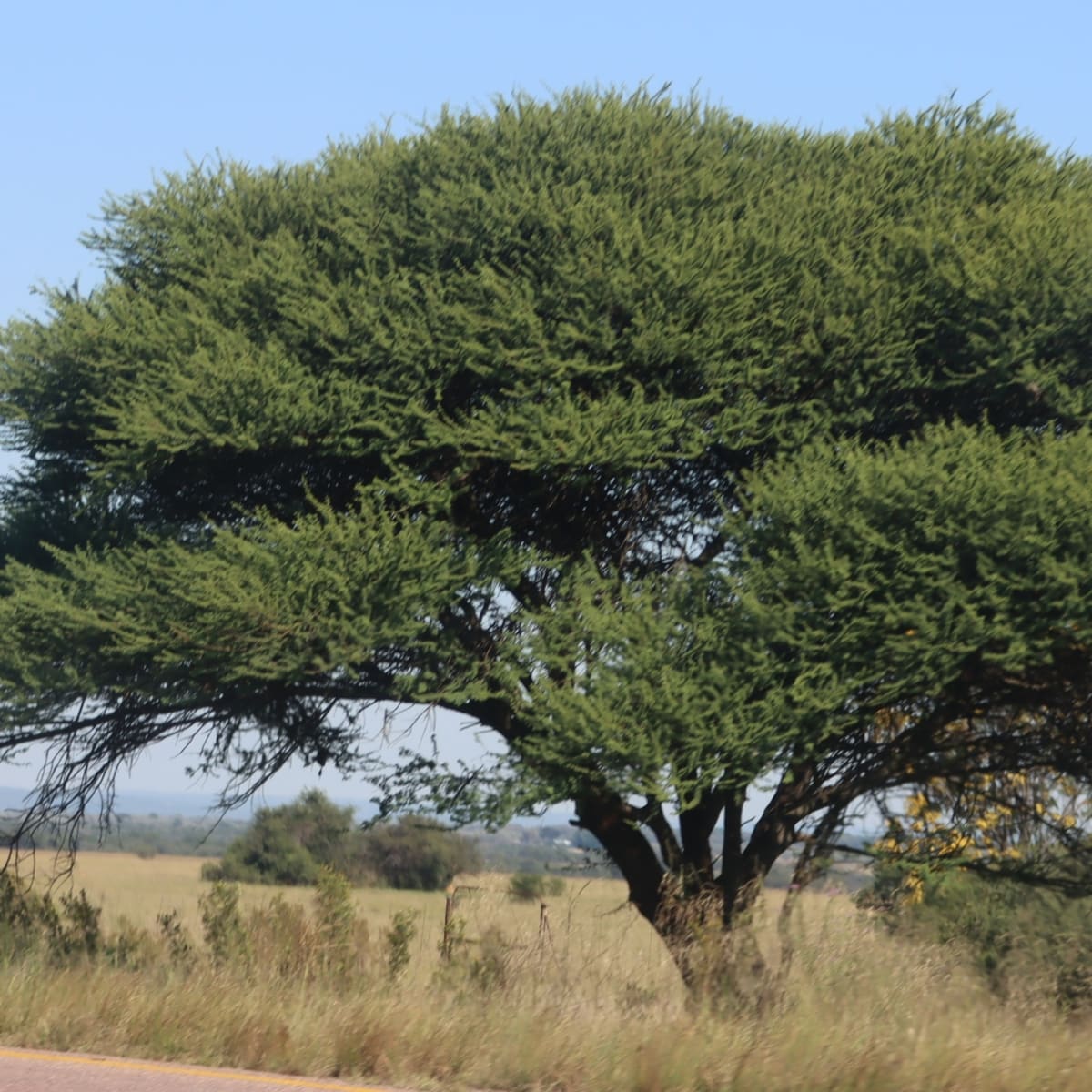
The umbrella thorn is the flat-topped acacia of every safari photograph: a wide, level crown on a short trunk, standing alone on open grass. Botanists now place Africa’s acacias in Vachellia and Senegalia, but every guide and traveller still calls this one the umbrella acacia.
Vachellia tortilis
Planning a trip
The umbrella thorn is the flat-topped acacia of every safari photograph: a wide, level crown on a short trunk, standing alone on open grass.
Kruger National Park
Umbrella thorns and knob thorns across the southern and central plains.
The classic acacia skyline, single trees on rolling grass.
Acacia woodland in the north and west, open plains to the south.
Species
Vachellia tortilis
Records
1,486
iNaturalist observations
Every booking on Spekboom supports conservation.
A record means a host has seen the Umbrella Thorn on the property or nearby. It is never a guarantee of a sighting.
The umbrella thorn is the flat-topped acacia of every safari photograph: a wide, level crown on a short trunk, standing alone on open grass. Botanists now place Africa’s acacias in Vachellia and Senegalia, but every guide and traveller still calls this one the umbrella acacia.
It grows in the dry savanna from the Kalahari to the Horn of Africa. In South Africa look for it in the Kruger, the Limpopo bushveld and northern KwaZulu-Natal. North of the border it is the tree of the Serengeti and the Masai Mara, where its shape against the plains is the view people come for.
Giraffe browse it from the top, which is part of why the crowns are so flat, and its curled pods are eaten by antelope and elephant in the dry season. It flowers with small white puffballs in early summer.
Yes, by every name a traveller uses. Botanists moved Africa’s acacias into the genera Vachellia and Senegalia, so its scientific name is now Vachellia tortilis, but guides still call it the umbrella acacia.
The Serengeti in Tanzania and the Masai Mara in Kenya, where umbrella thorns stand alone on the open plains. In South Africa, the Kruger, the Limpopo bushveld and northern KwaZulu-Natal.
The Umbrella Thorn is recorded throughout the year, so no month is the wrong month to look for it. For the parks where hosts record it most, these are the best seasons they give. Kruger National Park: Apr-Sep; Hluhluwe-Imfolozi Park: year-round, dry season May-Sep. In the dry months animals concentrate at water and the grass is short.
Vachellia tortilis, widely known as Acacia tortilis but attributed by APG III to the Vachellia genus, is the umbrella thorn acacia, also known as umbrella thorn and Israeli babool, a medium to large canopied tree native primarily to the savanna and Sahel of Africa (especially Sudan), but also occurring in the Middle East.
Stays that give back
Every stay on the Umbrella Thorn page lists the species its host has recorded on or near the property. A record is a sighting, never a promise.
See where to stay