
The conversation that started it
It began with something we kept noticing on the road. Look at how travel in Africa actually gets booked, and almost every platform standing between a guest and a small guesthouse is run from somewhere far away. Those companies are good at scale. What they do not have, and cannot really have, is any feel for the nuances of a small South African town: who runs the guesthouse, what the quiet season does to it, what the town itself is trying to become.
That distance has a cost. A heavy slice of every booking goes out as commission, and most of it leaves the country altogether. For one small operator that is the difference between a hard month and a steady one. For a whole town, counted across every bed, it is a slow draining of money that was earned right there. Travel to South Africa keeps growing, and we kept circling the same thought: more of what visitors spend should stay where they spend it, reinvested into the town rather than extracted from it. That was the conversation that became Spekboom.
What was missing
There was a quieter gap too. Often, when you visit a small town, you simply arrive, stay, and leave, and you never really learn what is happening behind the scenes. Most towns have people doing good and largely unseen work: a community trust, a small clinic, a nature reserve, a school. As a traveller you almost never come across any of it. You have no simple way to know it is there, let alone to help.
And a town can go either way. Return to a place you loved a few years on and you might feel a quiet shock: it can look more tired, or poorer, than you remember. That is the thing we most wanted to push against. We wanted the opposite to feel normal: that when you come back to a town, you can see it has come on a little since you were last there. For that to happen, a stay has to do more than simply pass through.
The town that taught us the model
We learned the model on the N1. Anyone who has driven between Johannesburg and Cape Town knows that road by heart, and we used to break the drive by turning off to Prince Albert to see friends. The town sits just off the highway at the foot of the Swartberg, small enough to walk end to end.
What changed things was talking to the people who actually run it. Over many visits we sat with community members, guesthouse owners and farmers, and they gave us a far truer picture of how a town like this works. It does not run on tourism alone. Tourism is one part of a much wider local industry, and the parts hold each other up.
They were honest that the town has two sides. One is the Prince Albert of the postcards: houses kept with real pride, every stoep swept. The other is harder. Arrive on a weekday and you might see children on the street who you would expect to be in school. What stayed with us was not the problem itself, but how openly the town was working on it. People talk, constantly and practically, about how to lift livelihoods, and they kept landing on the same answer: bring more residents into the work that visitors create.
Out of those conversations, three threads kept coming up: community, skills, and conservation, each carried by a local organisation already doing the work. They became the three causes a stay in Prince Albert can support, and the pattern for what Spekboom tries to do in every town it reaches.
 Community
 Skills
 Conservation
And you can watch it work. On one visit we noticed kids hanging around a street corner, smoking. A while later, the same age group was cycling, bibs on, helmets on, up and down Church Street and out onto the dirt roads. We asked what had changed, and it traced back to the community itself: local residents had set up incentives that helped children get a bicycle of their own. That is the whole idea, and it is a slow, plain thing: come back to a town and see it a little better than you left it. Kids on bikes instead of on the corner. A job that now exists.
The same pattern holds well beyond Prince Albert. Wherever you find small operators and serious local work, it repeats.
What a booking actually does
What we actually do is simple. We spend time in a town and ask around. We find the people and organisations already doing good work, whether a trust, a reserve or a school, and we bring them onto Spekboom alongside the places you can stay. Then we put their work in front of travellers, so that when you book you can see who your stay supports and choose a place whose work resonates with you.
The causes are real, named organisations, not vague categories. A booking can fund SANCCOB, the seabird hospital that hand-rears oiled and orphaned African penguins on the Cape coast; BirdLife South Africa; the Endangered Wildlife Trust; the National Sea Rescue Institute, whose volunteer crews launch in any weather; or the Johannesburg Wildlife Veterinary Hospital, which treats the confiscated pangolins and injured wildlife that come through its doors. Alongside those national names sit smaller, closer ones: a town hospice, a volunteer fire crew, a single nature reserve, each named by the host whose guests fund it.
The support is never a separate donation or an afterthought at checkout. A share of what you pay routes to the cause as part of the same booking, automatically, and every time. You can read about every organisation, in their own words, in the causes directory.
Where the name comes from
The name came from a place we kept coming back to. For years we would stay at our family cottage in a valley outside Lydenburg, on the route that crosses the Spekboom Rivier. It became a regular retreat, somewhere to slow life down for a night or two.
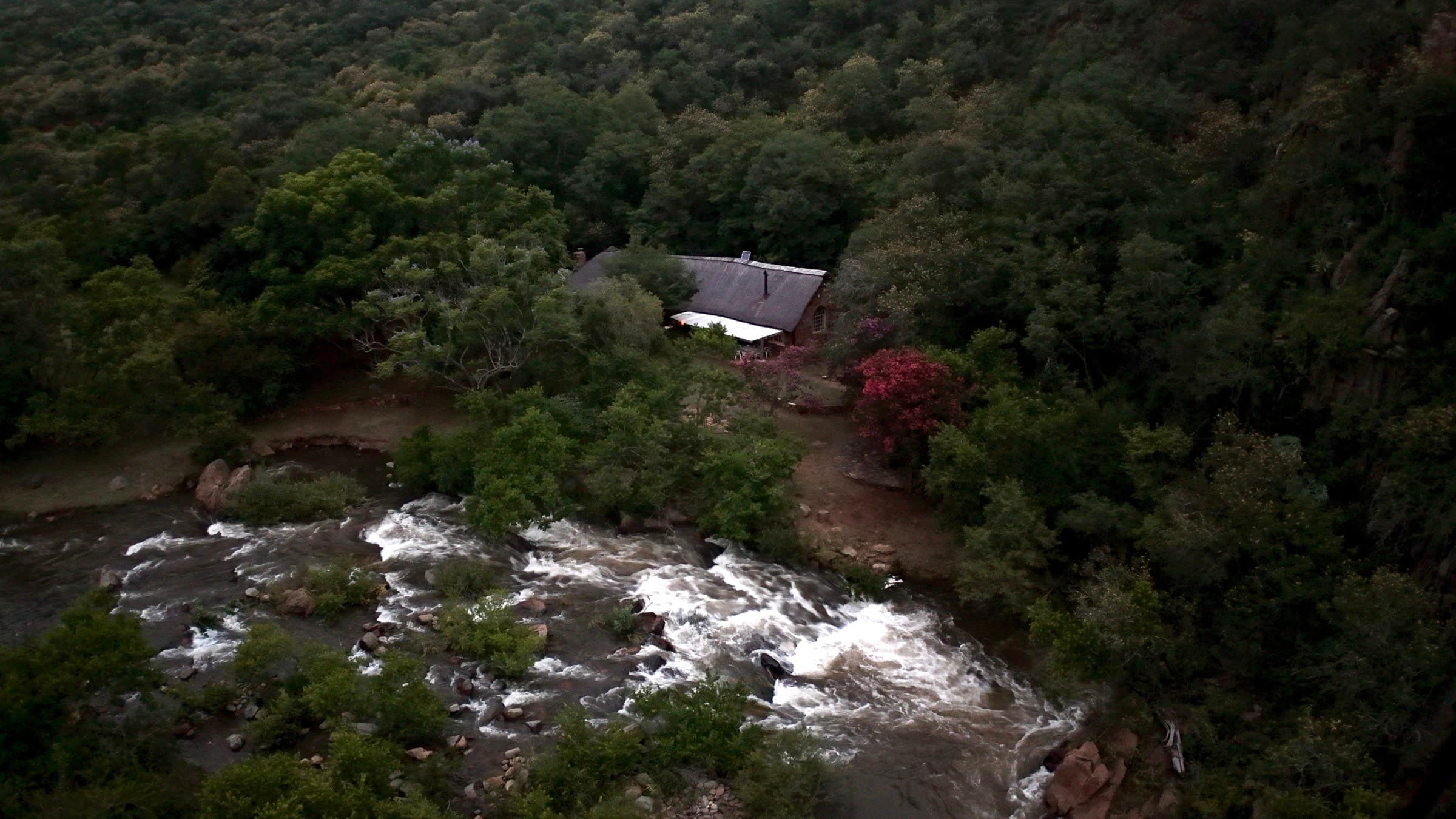
It was at that river that the name clicked. The spekboom is one of the most regenerative plants in the country: it pulls carbon out of the air far beyond its size, holds thin soil together, and turns worn-out land back into something living. A plant that gives back more than it takes was exactly the kind of travel we were trying to build.
And once we had noticed it, we saw it everywhere. Staying in guesthouses up and down the country, the spekboom kept turning up in gardens, along stoeps, spilling over walls onto pavements. A hardy, generous, everyday plant that quietly improves wherever it is planted. The name was already all around us.
There was a deeper reason it fit, though we only said it out loud later. Giving back more than you take is not a value we discovered on that road. It runs back through our own family for nearly four hundred years, from a Khoi interpreter at the founding of the Cape to a box of tea seed smuggled into the Eastern Highlands. We did not invent the idea behind Spekboom. We inherited it. That longer story is told in our story.
What we want this to become
What we want is a small thing, really. We want travellers to arrive somewhere and see it properly: to notice the people quietly holding a town together, and the many hands that keep it cared for and help it grow.
A stay on Spekboom is meant to open that window, and then to let you do something with what you find on the other side of it.
If that resonates, the simplest thing you can do is browse the listings or explore destinations across Africa, and pick a stay whose cause matters to you. Every cause has its own page in the causes directory, written by the organisations themselves. And if you run a small property or farm, you can feature your accommodation and choose the cause your guests will fund.
And if you live in a town with a story, a community already doing the work, a place whose potential just needs visitors to help unlock it, we would like to hear from you. Tell us about your town, and we will work with you to let travellers help improve it, one stay at a time.
The Spekboom team